

As a business owner, I know the struggle of needing funds quickly when sales are a bit slow or an unexpected opportunity pops up. Traditional loans can take forever, and frankly, they often have requirements that are hard to meet.
That’s where merchant cash advance companies come in. I’ve looked into them, and I want to share what I’ve learned so you can decide if they’re right for your business.
Key Takeaways
- Merchant cash advances aren’t loans; they provide cash for a share of your future sales.
- Funding is usually very fast, often within 24-48 hours.
- Repayments can change based on your sales volume.
- Instead of interest, a factor rate determines the total cost upfront.
- These are best for short-term needs, not long-term business investments.
What Are Merchant Cash Advance Companies?

When I first started looking into ways to get some quick cash for my business, I kept running into something called a merchant cash advance, or MCA. It’s not exactly a loan, which is what threw me off at first.
Think of it more like this: a company gives you a lump sum of money upfront, and in return, you agree to pay them back using a portion of your future credit card sales. It’s a way to get working capital pretty fast, especially if you process a lot of credit card payments.
So, what exactly are these companies? They’re essentially financial providers that specialize in these types of advances. They look at your business’s sales history, particularly your credit card sales, to figure out how much they can give you and how you’ll pay it back.
It’s a different approach than a traditional bank loan, which usually involves a more rigorous application process, credit checks, and collateral. MCAs are often seen as a more accessible option for businesses that might not qualify for bank loans or need funds much quicker.
Here’s a breakdown of what they do:
- Provide Upfront Cash: They give you a lump sum of money right away.
- Repay Through Sales: You pay them back with a percentage of your daily or weekly credit card sales.
- Use a Factor Rate: Instead of an interest rate, they use a factor rate. This means you know the total amount you’ll repay from the start, which is the original advance plus a set percentage.
- Faster Approval: Compared to traditional loans, the approval and funding process is usually much quicker, often within a few days.
How Merchant Cash Advance Companies Work

So, you’re thinking about a merchant cash advance, or MCA. I get it, sometimes you just need cash, and fast. It’s not quite like a bank loan, and that’s kind of the point for a lot of businesses.
Basically, these companies give you a chunk of money upfront. In return, they take a cut of your future sales, usually from your credit or debit card transactions. It’s a way to get working capital pretty quickly.
Here’s how I see it working:
- You get a lump sum: The MCA company sends you the money you need. This is usually pretty fast, sometimes within a day or two. It’s not a loan, so there’s no interest rate in the traditional sense.Instead, they use something called a ‘factor rate’.This is just a multiplier that tells you how much you’ll pay back in total. For example, a factor rate of 1.3 means for every dollar you borrow, you pay back $1.30.
- They take a percentage of your sales: This is the main difference from a loan. Instead of fixed monthly payments, the MCA company takes a small percentage of your daily or weekly credit card sales.This means your payment amount changes depending on how much you sell.If you have a slow sales week, you pay less; if it’s a busy week, you pay more. This can be helpful for businesses with fluctuating income.
- The agreement is straightforward: You agree on the advance amount, the total payback amount (based on that factor rate), and how they’ll collect the payments. They might take the money directly from your merchant account where your card sales go.It’s all laid out upfront, so you know the total cost before you even get the money. This is a key difference from some loans where interest can add up unexpectedly. It’s a way to get immediate funds for your business needs.
It’s a pretty simple setup, really. They give you cash, you pay them back from your sales. It’s designed to be quick and flexible, especially if your business relies heavily on credit card sales. It’s not for everyone, but for some businesses, it’s a lifesaver when cash flow gets tight.
Factors to Consider When Choosing Merchant Cash Advance Companies

When I’m looking for a merchant cash advance, I don’t just go with the first company I find. There are a few things I always check to make sure I’m getting a good deal and not getting myself into a mess. It’s important to do your homework.
First off, I look at the factor rate. This is basically how they calculate how much you’ll pay back. It’s not like a traditional loan with interest that can change. With an MCA, it’s usually a set number, like 1.15, meaning for every dollar you borrow, you pay back $1.15.
I want to know this number upfront so I can figure out the total cost. Some companies might try to hide fees or make it confusing, so I read the fine print carefully. Understanding the pricing model is key.
Next, I consider the repayment structure. How will the money be taken out of my business? Some companies take a percentage of my daily credit card sales, which makes sense if my sales fluctuate. If my sales are lower one week, I pay back less.
Others might want a fixed amount taken out each day or week. I have to think about which one fits my business’s cash flow better. I don’t want to be stuck paying a big chunk when I’m having a slow month.
I also pay attention to the company’s reputation and customer service. I’ve heard stories about some companies being really difficult to deal with or having hidden clauses in their contracts. I usually check online reviews and see what other business owners are saying.
Are they responsive? Do they explain things clearly? It’s good to find a company that’s upfront and easy to communicate with, especially when you need funds quickly. Having a good relationship can make the whole process smoother.
Merchant Cash Advance Companies vs. Traditional Lenders
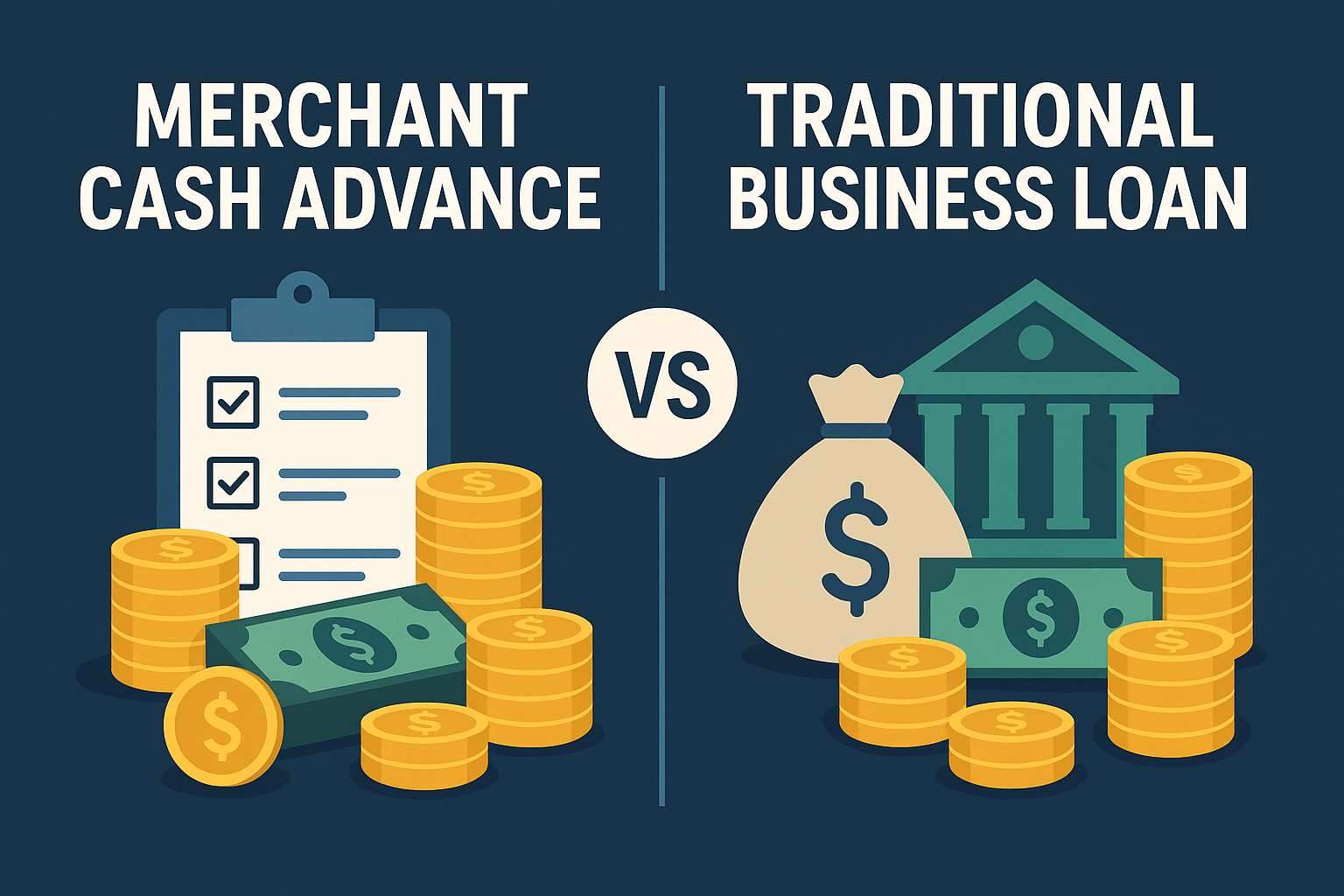
When I first started looking into funding options for my business, I was a bit overwhelmed. There are so many choices out there, and they all seem to have their own set of rules and requirements.
I wanted to compare merchant cash advances (MCAs) with what most people think of as a ‘normal’ loan, like the kind you get from a bank.
One of the biggest differences I noticed is how they calculate the cost. Traditional loans usually have an interest rate, which is a percentage of the amount borrowed that you pay back over time.
This rate can sometimes change, and it adds up. MCAs, on the other hand, use something called a factor rate. It’s basically a multiplier. So, if I borrow $10,000 and the factor rate is 1.2, I know I’ll pay back $12,000. It’s a flat fee, set from the start.
This means I know the total amount I owe right away, which is kind of nice. However, when you break down that factor rate into an annual percentage rate (APR), it can often be much higher than what a bank would charge. It’s a trade-off for getting the money faster.
Here’s a quick rundown of how I see the main differences:
- Speed of Funding: Banks can take weeks, sometimes months, to approve and disburse a loan. It feels like a really long time when you need cash quickly. MCAs are designed to be fast.I’ve seen businesses get approved and funded in as little as 24 hours.This is a huge deal if you have a time-sensitive opportunity or need to cover an unexpected expense.
- Qualification Requirements: Banks often have strict criteria. They look closely at your credit score, how long you’ve been in business, and your financial history. If your credit isn’t perfect or your business is still new, getting a traditional loan can be tough.MCAs tend to be more flexible.They often focus more on your business’s sales history and cash flow rather than just your personal credit score. This makes them more accessible for many small business owners.
- Repayment Structure: With a bank loan, you typically make fixed monthly payments. It’s predictable. MCAs, however, usually take a small percentage of your daily or weekly credit card sales.This means your payments fluctuate based on your revenue.If sales are good, you pay back more; if sales are slow, you pay back less.
This can be helpful during slower periods, but it also means the repayment timeline isn’t as fixed as a traditional loan. It’s important to understand how this variable repayment works before you commit.
So, while traditional loans might offer a lower overall cost if you have excellent credit and time to wait, MCAs provide a quicker, more accessible way to get capital, especially if your business has consistent sales.It really comes down to what your business needs most: speed and flexibility, or a potentially lower long-term cost with more stringent requirements.
Top Industries That Use Merchant Cash Advance Companies

When I first started looking into merchant cash advances, I was curious about which types of businesses actually use them. It turns out, a lot of different kinds of businesses rely on this type of funding, especially when they need cash pretty quickly.
It’s not just for one specific type of company; it’s more about the business’s cash flow and how fast they need the money.
Here are some of the industries I’ve seen that commonly use merchant cash advances:
- Restaurants and Cafes: These places often have fluctuating daily sales. A busy weekend can bring in a lot of cash, but a slow Tuesday might mean less.An MCA can help cover unexpected costs, like a broken oven or a need for more inventory, without the pressure of a fixed loan payment that might be too high during a slow week. It’s a way to smooth out the bumps.
- Retail Stores: Whether it’s a small boutique or a larger shop, retail can be seasonal. Think about the holiday rush versus the summer slump.MCAs can provide the capital needed to stock up for busy periods or to get through slower months. The ability for payments to adjust based on sales is a big plus here.
- Salons and Spas: Similar to restaurants, these businesses often have busy and slow days. They might need funds for new equipment, training staff, or even just to cover payroll during a less profitable period. The quick access to funds is often key for these service-based businesses.
- Auto Repair Shops: When a major piece of equipment breaks down, or they need to buy a large stock of parts for a specific job, auto shops can benefit from the speed of an MCA. They don’t want to turn away customers because they lack the necessary tools or parts, and an MCA can bridge that gap.
- Small Service Businesses: This is a broad category, but it includes everything from plumbing and electrical services to consulting firms.If they need to buy new tools, invest in marketing, or cover operating expenses while waiting for client payments, an MCA can be a practical solution.It’s a way to keep the business running smoothly without a long wait for traditional financing.
Many businesses find that this simplicity is part of the appeal, and it can be a lifeline for companies in transition.If you’re still building credit, this option can help you access the funding you need now, without the wait. It’s important to understand how these advances function in Canada, as the landscape can differ. MCA funding is evolving.
Basically, any business that has regular sales, especially those processed through credit cards or other electronic means, can potentially use a merchant cash advance. The main draw is the speed and the way the repayment is tied to the business’s actual sales, making it a flexible option for many.
Alternatives to Merchant Cash Advance Companies
While merchant cash advances (MCAs) can be a quick way to get funds, especially if your business has steady credit card sales, they aren’t the only option out there.
Sometimes, the cost can be pretty high, and the repayment structure, while tied to sales, might not always be the best fit for every business. I’ve looked into a few other ways to get capital that might work better depending on your situation.
Here are some alternatives I’ve found:
- Traditional Business Loans: These are often from banks or credit unions. They usually have lower interest rates than MCAs, but the application process can take longer, and they often require a good credit score and a solid business plan.If you have time and good credit, this is usually the most cost-effective route. You can find resources that list various small business loan options, which can be helpful when comparing different types of financing.
- SBA Loans: Loans backed by the Small Business Administration are another solid choice. They tend to have favorable terms and lower interest rates. The catch is that they can be more complex to apply for and take longer to get approved. However, the long-term benefits often outweigh the initial hassle.
- Business Lines of Credit: Think of this like a credit card for your business. You get approved for a certain amount, and you can draw from it as needed, only paying interest on what you use.This is great for managing day-to-day expenses or unexpected costs without taking out a large lump sum. It offers flexibility and can be a good way to handle fluctuating cash flow.
- Invoice Factoring: If your business has outstanding invoices that customers will pay later, you can sell those invoices to a factoring company. They give you a percentage of the invoice amount upfront, minus their fees.It’s a way to get cash quickly based on money you’re already owed, without taking on debt. This can be a good option if you have a lot of accounts receivable but need cash now.
It’s really about looking at what your business needs most – speed, cost, flexibility – and then finding the financing that matches. I always suggest doing your homework and comparing a few different options before committing to anything.
Looking for other options besides merchant cash advances? There are many ways to get the funding your business needs. Explore different paths to financial support and discover what works best for you. Visit our website today to learn more about your choices!
So, What’s the Takeaway?
Look, getting a merchant cash advance isn’t like taking out a traditional bank loan. It’s a different beast altogether, and honestly, I’ve found it can be a real lifesaver when my business needs cash now.
It’s fast, the requirements aren’t as strict as a bank’s, and the payments can actually adjust based on my sales, which is pretty neat when things get a little slow. But, and this is a big ‘but’, it’s usually more expensive than a bank loan.
You’re paying for that speed and flexibility. So, if you’re thinking about it, make sure you really understand the factor rate and what you’ll end up paying back.
It’s not for every business, and it’s definitely not for long-term plans, but for those short-term cash flow gaps or unexpected opportunities? It might just be the answer you’re looking for. Just do your homework first.
Frequently Asked Questions
What exactly is a merchant cash advance?
Think of a merchant cash advance, or MCA, as a way to get money for your business quickly. Instead of a traditional loan, a company gives you a lump sum of cash upfront. In return, you pay them back with a small portion of your future sales, usually from credit card transactions. It’s like selling a bit of your future income now to get cash today.
How is an MCA different from a bank loan?
The biggest difference is speed and how you pay it back. Bank loans can take weeks or months to get approved, and you usually pay a set amount each month with interest. MCAs can get you cash in as little as a day or two. Instead of interest, you pay a ‘factor rate,’ which is a set fee. Your payments also often change based on how much you sell, making them more flexible if your sales go up and down.
What do I need to apply for an MCA?
You’ll generally need to show that your business has been around for a little while, usually at least six months. You’ll also need to have a certain amount of monthly sales, often $15,000 or more, and accept credit card payments. They’ll likely ask for things like your business bank statements, credit card processing statements, and maybe your business license or tax returns. It’s less about your personal credit score and more about your business’s sales history.
How do I pay back a merchant cash advance?
Most of the time, the MCA company takes a small percentage of your daily or weekly credit and debit card sales directly. So, if you have a busy sales week, you’ll pay back a bit more, and if it’s a slow week, you’ll pay back less. This is different from a loan where you have a fixed payment every month, no matter how your sales are doing.
Are MCAs very expensive?
MCAs can be more costly than traditional bank loans. This is because you’re paying for the speed and convenience. Instead of interest that can change, you agree on a ‘factor rate’ upfront. This means you know the total amount you’ll repay from the start. While it might seem like a lot compared to a loan’s interest rate, many businesses find the quick access to cash worth the extra cost, especially when they need it fast.
When does it make sense for my business to get an MCA?
An MCA is often a good choice if your business needs cash very quickly, maybe to grab a limited-time opportunity or cover unexpected expenses. They’re also helpful if your sales are seasonal or if you don’t quite meet the strict requirements of traditional banks. If you have steady credit card sales and need working capital fast, an MCA could be a good solution to keep your business running smoothly or help it grow.


