

When I’m looking to tap into the value I’ve built up in my home, I often think about the difference between a home equity loan and a home equity line of credit, or HELOC. It’s not always clear which one is the better fit for my needs, especially since both use my home as collateral.
I’ve found that understanding how each one works, and what the key differences are, really helps me make the right decision for my financial situation. Let’s break down the difference between home equity loan and line of credit.
Key Takeaways
- A home equity loan gives me a set amount of money all at once, with payments that stay the same each month.
- A HELOC is like a credit card for my home’s equity; I can borrow, pay back, and borrow again up to a limit, and the interest rate can change.
- The main differences I see are how I get the money, how I pay it back, and whether the interest rate is fixed or can go up and down.
- My personal financial situation and what I plan to use the money for are the biggest factors in deciding which is best for me.
- Both options have good and bad points I need to consider carefully before I commit.
Difference Between Home Equity Loan and Line of Credit

When I’m looking at ways to borrow money using my home’s equity, I often see two main options: a home equity loan and a home equity line of credit, or HELOC.
They sound similar, and in a way, they are – both let you tap into the value you’ve built up in your house. But how they actually work, and when you’d use one over the other, is quite different.
This predictability is a big plus for me when I’m budgeting. These loans typically have set repayment periods, often ranging from five to 30 years. It’s a good option if I know exactly how much money I need for a specific project, like a big renovation where I have a clear estimate of costs.
A HELOC, on the other hand, is more like a credit card. It’s a revolving line of credit, meaning you have a credit limit, and you can borrow money, pay it back, and then borrow it again.
The borrowing period for a HELOC is usually split into two phases: a draw period where you can access funds, and then a repayment period where you pay back what you’ve borrowed.
For instance, a home equity loan offers a longer repayment period compared to a HELOC, but requires a significant amount of home equity to qualify.
Here’s a quick look at some of the main distinctions:
- How you get the money: Home equity loan gives you a lump sum upfront. A HELOC gives you access to a credit line you can draw from as needed.
- Interest Rates: Home equity loans usually have fixed rates. HELOCs typically have variable rates, which can change over time. [674e]
- Repayment: With a home equity loan, you make regular payments that include both principal and interest. With a HELOC, during the draw period, you might only pay interest, and then you start paying back principal and interest later.
- Best for: Home equity loans are often better for large, one-time expenses with predictable costs. HELOCs can be more suitable for ongoing or uncertain expenses.
How Home Equity Loans Work

So, you’re thinking about tapping into your home’s equity, huh? A home equity loan is basically like getting a second mortgage, but instead of paying for your house, it gives you a chunk of cash upfront.
Lenders usually let you borrow a good portion of the equity you’ve built up – often up to 80% or even 85% of your home’s value, though some might go higher.
When you get a home equity loan, you receive the entire amount you borrowed all at once, in a single lump sum. This is different from other types of loans where you might get money over time.
Here’s a breakdown of how it generally works:
- Lump Sum Disbursement: You get all the money at once. This is super handy if you have a big, one-time expense, like a major home renovation project or a large medical bill.
- Fixed Interest Rate: Most home equity loans come with a fixed interest rate. This means your interest rate stays the same for the entire life of the loan, making your monthly payments predictable. No surprises there!
- Repayment Terms: You’ll typically pay back the loan, plus interest, in regular monthly installments. These loans usually have set repayment periods, often ranging from 5 to 30 years.
It’s worth noting that because your home is used as collateral, these loans often have lower interest rates compared to unsecured loans like personal loans or credit cards.
Plus, if you use the money for significant home improvements, you might even be able to deduct the interest you pay on your taxes, assuming you itemize. Just remember, though, that your home is on the line if you can’t make the payments, so it’s a big commitment.
How a Home Equity Line of Credit Works

A home equity line of credit, or HELOC, is a bit different from a standard home equity loan. Think of it more like a credit card, but one that’s secured by your house.
With a HELOC, you only pay interest on the money you actually take out, not the total amount you’re approved for. This can save you a good chunk of change compared to borrowing the full amount upfront and paying interest on it from day one.
Here’s a general idea of how the timeline usually works:
- Draw Period: This is the initial phase, often lasting 10 to 15 years. During this time, you can borrow funds from your HELOC whenever you need them. You’ll typically make minimum payments that cover the interest, and sometimes a little bit of the principal.
- Repayment Period: Once the draw period ends, you can no longer borrow money. Now, you’ll start making regular payments that include both principal and interest to pay off the remaining balance. This period can last for another 10 to 20 years, similar to a traditional mortgage.
Most HELOCs come with a variable interest rate. This means the rate can go up or down based on market conditions, tied to a benchmark rate. While this can be a pro if rates fall, it also means your monthly payments could increase if rates rise.
Key Differences Between Home Equity Loan and Line of Credit
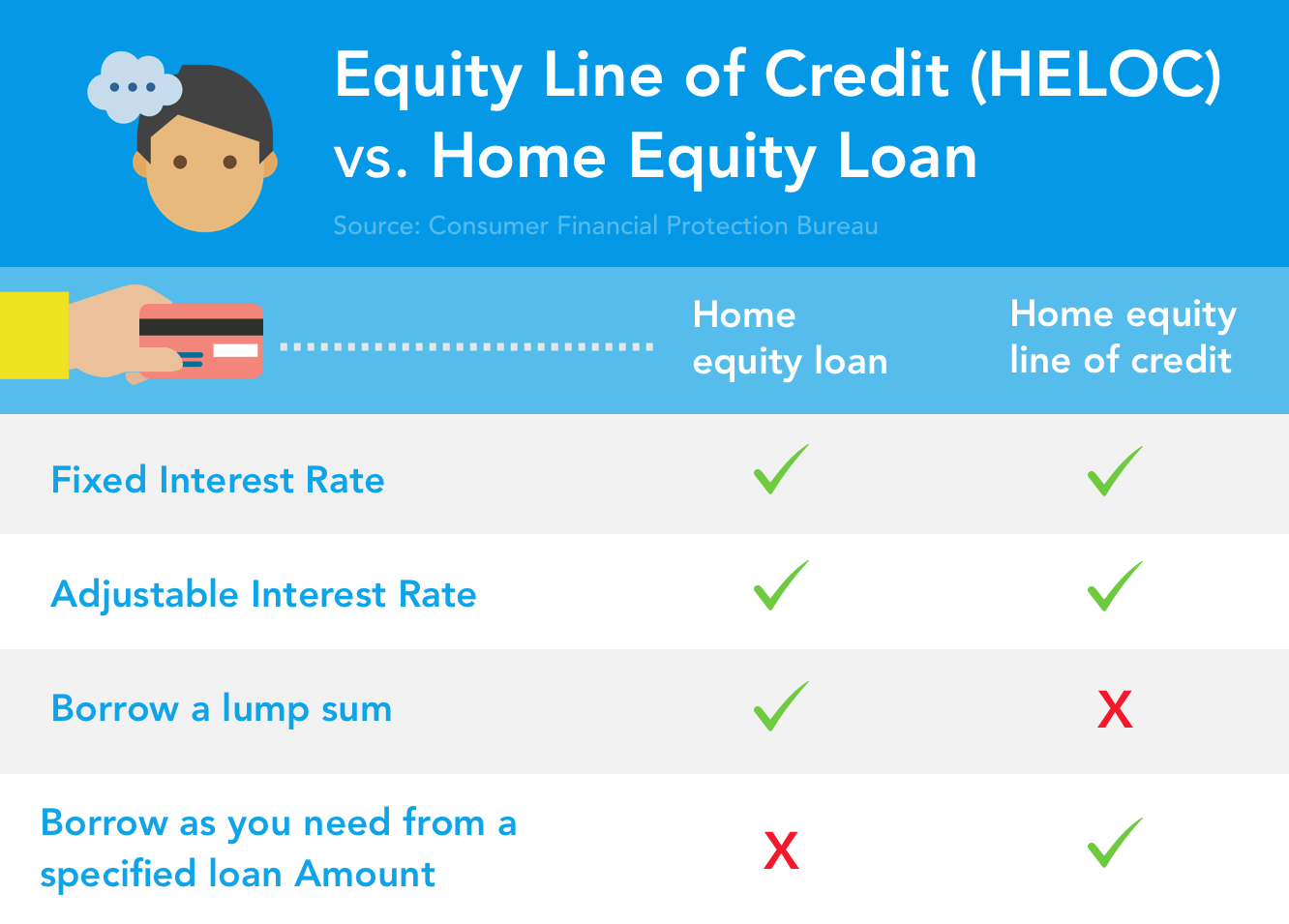
When I first started looking into borrowing against my home’s equity, I found myself a bit confused by the terms. It turns out, there are some pretty significant differences between a home equity loan and a home equity line of credit (HELOC).
A HELOC, on the other hand, is more like a credit card. You get approved for a certain credit limit, and you can borrow money as you need it, up to that limit.
You only pay interest on the amount you’ve actually used. This flexibility is great if your expenses are unpredictable or spread out over time, such as ongoing home repairs or tuition payments.
Here’s a quick rundown of the main differences:
- How You Get the Money: With a home equity loan, you receive all the cash upfront in one go. A HELOC gives you access to a credit line you can draw from as needed.
- Repayment Structure: Home equity loans have fixed monthly payments that include both principal and interest. HELOCs typically have interest-only payments during the draw period, and then you start paying back both principal and interest after that period ends.
- Interest Rates: Home equity loans usually have fixed interest rates, making your payments consistent. HELOCs most often have variable rates, which can change over time.
- Flexibility: HELOCs offer more flexibility in how you access and repay funds, while home equity loans are more straightforward with set terms.
Choosing between the two really depends on your financial situation and what you plan to do with the money. If you need a large sum for a specific purpose and prefer predictable payments, a home equity loan might be the way to go.
Which Is Better – Home Equity Loan or Line of Credit?

So, you’ve got some equity built up in your home and you’re thinking about tapping into it. That’s great! But now comes the big question: should you go for a home equity loan or a home equity line of credit (HELOC)?
You know the total cost, you get the funds, and you start paying it back steadily. It offers a predictable path for repayment.
This flexibility is super handy for ongoing projects, like a series of smaller home improvements, or for covering unpredictable expenses that might pop up over time. Most HELOCs have variable interest rates, though, so your payments could go up or down. It’s important to be aware of that.
Here’s a quick rundown to help you decide:
- Home Equity Loan:
- Best for a single, known expense (e.g., a new roof, a major renovation).
- You receive the full amount at once.
- Typically comes with a fixed interest rate and predictable monthly payments.
- Repayment starts almost immediately.
- Home Equity Line of Credit (HELOC):
- Ideal for ongoing expenses, multiple projects, or when you’re unsure of the total cost.
- You can borrow, repay, and borrow again during the draw period.
- You only pay interest on the funds you use.
- Often has a variable interest rate, meaning payments can change.
- Offers more flexibility in accessing funds over time.
Ultimately, the choice depends on your financial habits and the nature of your spending. If you need a large sum for a specific purpose and prefer the certainty of fixed payments, a home equity loan might be your best bet.
If you value flexibility and want access to funds over time, potentially paying less interest if you don’t use it all, a HELOC could be the way to go.
How to Qualify for Home Equity Loan vs. Line of Credit

So, you’re thinking about tapping into your home’s equity, huh? Whether you’re leaning towards a lump sum from a home equity loan or the flexible access of a HELOC, the qualification process has some common ground, but there are a few nuances. I’ve found that lenders generally look at a few key things for both.
First off, home equity is the big one. You can’t borrow against equity you don’t have. Most lenders want to see that you’ve paid down a good chunk of your mortgage, usually meaning you have at least 15% to 20% equity in your home.
Then there’s your debt-to-income ratio, or DTI. This is basically a snapshot of how much debt you carry each month compared to your gross monthly income.
To prove you’ve got the income to back it all up, be ready to show recent pay stubs, W-2 forms, and tax returns. It’s all about showing lenders you have a steady income stream to manage the new loan payments.
Here’s a quick rundown of what lenders typically look for:
- Home Equity: At least 15-20% equity is usually required.
- Credit Score: Aim for 680+, though some lenders accept lower.
- Debt-to-Income Ratio (DTI): Keep it below 43% if possible.
- Income Verification: Have pay stubs, W-2s, and tax returns ready.
- Home Appraisal: This will be needed to determine your home’s value.
Deciding between a home equity loan and a home equity line of credit can be tricky. Both let you borrow against your home’s value, but they work differently.
So, Which One Is Right for You?
After looking at both home equity loans and lines of credit, I think it’s clear that neither is a one-size-fits-all solution. A home equity loan gives you a set amount of cash upfront, which is great if you know exactly how much you need for a big project and want predictable payments.
On the other hand, a HELOC is more like a flexible credit card, letting you borrow as you need it, which could be handy for ongoing expenses or when you’re not sure of the total cost.
It really comes down to your personal situation, how you plan to use the money, and how comfortable you are with potential changes in interest rates. Make sure to really think about your own finances and goals before you decide, and maybe even chat with a financial advisor to make sure you’re picking the best option for your home and your budget.
Frequently Asked Questions
What’s the main difference between a home equity loan and a HELOC?
Think of a home equity loan like getting a big chunk of cash all at once. You borrow a set amount and pay it back with regular, predictable payments over time. A HELOC, on the other hand, is more like a credit card. You get a credit limit, and you can take out money as you need it, pay it back, and then borrow again. You only pay interest on the money you actually use.
When would I choose a home equity loan over a HELOC?
I’d lean towards a home equity loan if I knew exactly how much money I needed and wanted a steady, unchanging payment each month. It’s great for big, one-time expenses like a major home renovation where I have a clear budget and timeline.
And when is a HELOC a better choice for me?
I’d prefer a HELOC if I wasn’t sure of the exact amount I’d need or if I had ongoing expenses that pop up unpredictably. It gives me the flexibility to borrow only what I need, when I need it, which is helpful for things like covering tuition payments over several semesters or unexpected medical bills.
Are the interest rates different for these two options?
Usually, home equity loans have fixed interest rates. This means my payments stay the same throughout the loan’s life, making it easier to plan my budget. HELOCs typically have variable rates, which means my interest rate and payments could go up or down depending on the market.
What are the risks involved with using my home as collateral?
The biggest risk is that my home is used as security for the loan. If I can’t make my payments, the lender could take my home. Also, if my home’s value drops, I might end up owing more than it’s worth, which is a tough spot to be in.
Can I get a tax break on the interest I pay?
Sometimes! If I use the money from either a home equity loan or a HELOC for significant home improvements, I might be able to deduct the interest I pay on my taxes, but I’d need to check the specific rules and consult a tax professional.


